
A prosthetic can look impressive and still fall short of what the person wearing it actually needs. The real measure of modern prosthetic technology is not how advanced a component appears. It is whether that technology helps someone move more naturally, feel more comfortable, and participate more fully in everyday life.
That distinction has become increasingly important as prosthetic technology continues to advance. Sensors can collect information about movement and pressure. Microprocessor-controlled components can respond to changes in walking speed and terrain. New materials can reduce weight while maintaining strength. Advanced socket designs can improve the connection between the body and the prosthetic. Yet none of these innovations exists in isolation. The most successful result still depends on how well the technology is selected, fitted, adjusted, and integrated into the life of the individual.
At Around and About Inc., this combination of technology and individualized clinical care is central to the approach. The practice brings together decades of hands-on experience, custom fabrication, rehabilitation, and modern prosthetic options to help patients pursue greater comfort, function, and independence.
Prosthetic Technology Is Becoming More Responsive
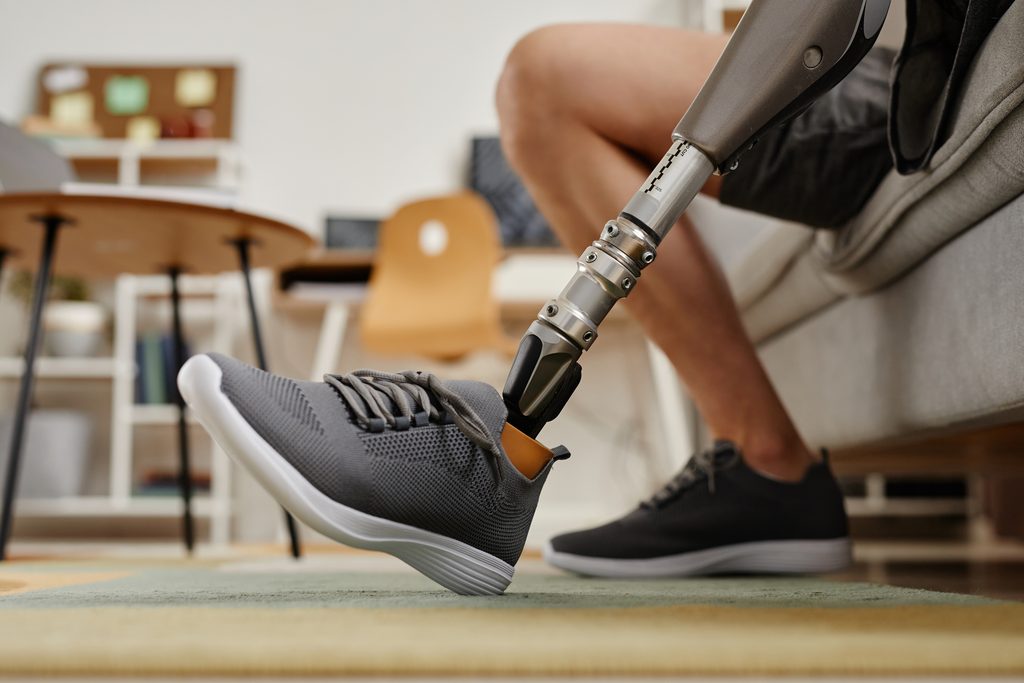
For many years, progress in prosthetic design focused heavily on making devices lighter, stronger, and more durable. Those qualities remain important, but modern development is increasingly focused on responsiveness. Instead of simply providing mechanical support, advanced prosthetic systems can help respond to what the user is doing.
Microprocessor-controlled knees are a good example. Rather than functioning with one fixed mechanical response, these systems can make adjustments as a person changes speed or encounters different walking conditions. Around and About Inc. provides access to advanced prosthetic options including microprocessor technology designed for patients with different functional and activity needs. Its prosthetic options include devices intended for everyday mobility as well as more dynamic and athletic applications.
This does not mean every patient needs the most technologically advanced component available. A successful prosthetic begins with understanding the individual. Someone who wants to comfortably navigate a home and neighborhood may have very different requirements from someone who works on their feet all day, exercises regularly, travels frequently, or participates in competitive sports.
The technology should follow the patient’s needs rather than forcing the patient to adapt to the technology.
Smart Sensors Are Changing What Clinicians Can Understand
One of the most interesting areas of prosthetic research involves sensors capable of gathering information that previously depended largely on observation and patient feedback.
Pressure inside a prosthetic socket is particularly important. The socket is where the residual limb interacts with the prosthetic system, making its fit essential to comfort and control. Researchers are developing sensor systems that can measure pressure within lower limb prosthetic sockets. A 2026 study published in BioMedical Engineering OnLine examined a textile-based pressure sensing system designed specifically for this purpose.
The broader development of wearable sensors also has potential applications in smart prosthetics. Research indexed by the National Library of Medicine has explored wearable sensors for personalized health monitoring, smart prosthetics, and assistive technology. These systems can potentially capture information about movement, physical signals, and interaction with the surrounding environment.
For patients, the significance is not simply that a prosthetic contains more electronics. The real opportunity is better information. When clinicians can understand how forces are distributed or how a device performs during movement, that information may eventually help support more informed decisions about fit and function.
Technology is becoming another source of information for clinicians, not a replacement for clinical judgment.
The Socket Still Determines Much of the Experience
It is easy to focus on sophisticated knees, feet, hands, sensors, and electronics because those components attract attention. Yet one of the most important elements of a prosthetic remains the socket.
A socket creates the interface between the person and the rest of the prosthetic system. If that connection is uncomfortable or poorly suited to the individual, even an advanced component may not provide the experience the patient expects.
Small differences matter. Residual limb shape, skin condition, volume changes, alignment, suspension, activity level, gait, and daily routines can all affect how the prosthetic feels and functions.
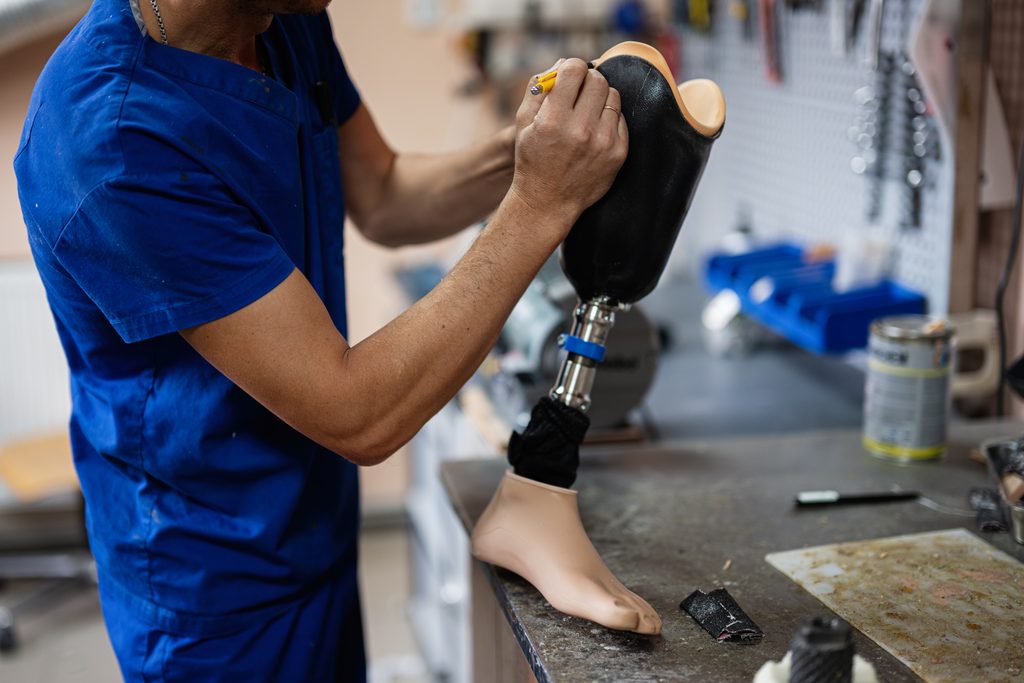
Around and About Inc. emphasizes socket designs that combine comfort, technology, and function. The facility also has onsite production capabilities, allowing custom prosthetic work and adjustments to be performed within the practice rather than treating fabrication as a completely separate part of patient care. You can explore the company’s complete range of prosthetic and rehabilitation services to see how upper extremity, lower extremity, sports prosthetics, orthotics, and rehabilitation are brought together.
This is where personalization becomes more than a marketing term. It means considering the patient’s anatomy, goals, physical abilities, daily environment, and response to the device.
Personalized Mobility Means Designing Around Real Life
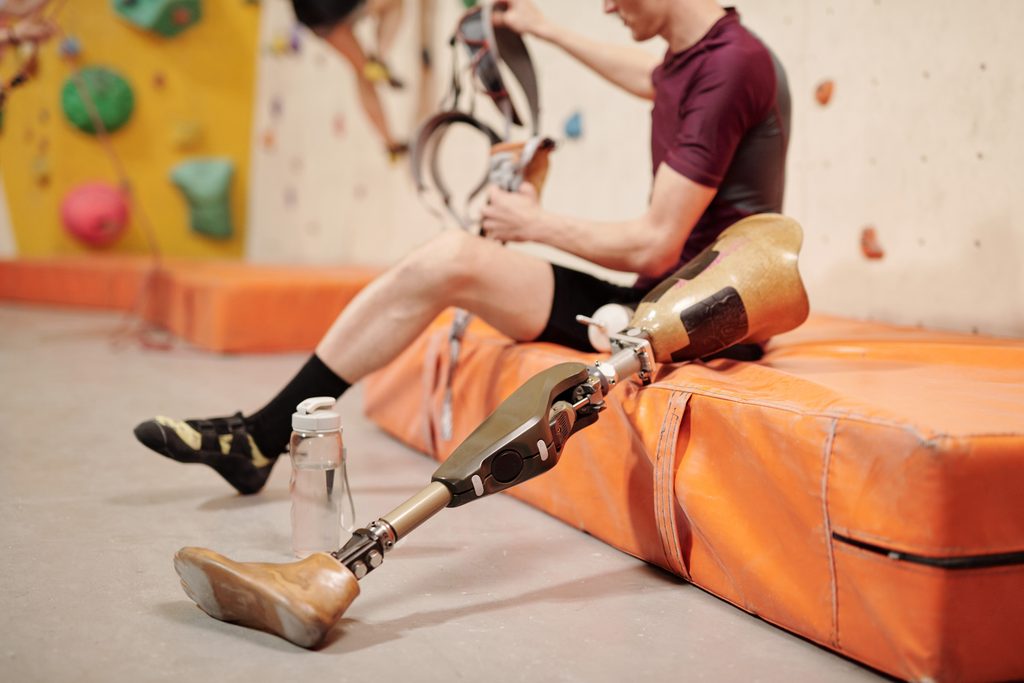
Two people with similar amputations may need completely different prosthetic solutions.
One person may spend much of the day walking through an office. Another may work outdoors. Someone else may want to return to running, cycling, weight training, or another sport. A parent may be concerned about keeping up with young children. An older adult may place greater emphasis on stability and confidence while navigating the home and community.
A meaningful evaluation therefore goes beyond asking whether a person can walk with a prosthetic. The better question is how that person wants and needs to move.
Around and About Inc. offers prosthetic options across different functional levels, including dynamic and sports-focused solutions. The practice also provides custom sports prosthetics designed around specific athletic activities and lifestyles.
That approach reflects where prosthetic technology is heading. The goal is becoming less about creating one device that works reasonably well for everyone and more about matching the right combination of socket, suspension, components, alignment, and rehabilitation to the individual.
Advanced Components Cannot Replace Expert Evaluation
New technology can create the impression that selecting a prosthetic is similar to choosing a new piece of consumer technology. Compare specifications, select the most advanced model, and expect better performance.
Prosthetic care does not work that way.
A sophisticated component may offer capabilities that are unnecessary for one patient while providing meaningful advantages for another. Physical condition, balance, strength, residual limb health, functional goals, experience with a prosthetic, environment, and activity level can all influence what is appropriate.
Clinical experience therefore becomes even more important as technology advances.
Richard W. Conrey Jr., founder of Around and About Inc., is an American Board Certified and Florida Licensed Prosthetist and Orthotist with more than 30 years of experience and a Master of Science degree in Physical Therapy. That combination of prosthetic knowledge and rehabilitation experience supports a broader view of mobility that considers the person as well as the device. More information about the clinical background and philosophy of the practice is available on the About Around and About Inc. page.
The technology may be sophisticated, but knowing when and how to use it remains a human skill.
Rehabilitation Is Part of Prosthetic Technology Success
Receiving a new prosthetic is not the end of the process. The body has to learn how to use it effectively.
Walking involves balance, timing, muscle activation, coordination, posture, and adaptation to different surfaces. Even when a prosthetic is properly fitted, rehabilitation can play an important role in helping the patient become comfortable and confident with the device.
This is an area where Around and About Inc. has an unusual advantage. Physical therapy is available onsite, and the facility includes a suspension ceiling track extending more than 120 feet. The system allows patients to participate in therapeutic training while partially unloading body weight, providing another environment for working on movement and prosthetic use.
The onsite laboratory also allows prosthetic adjustments to be made when necessary during the broader rehabilitation process. Instead of treating the prosthetic and physical movement as unrelated issues, clinicians can evaluate how the device actually performs as the patient uses it.
That connection between fabrication, fitting, movement, and rehabilitation is important because a prosthetic does not function on a workbench. It functions while a person walks, turns, sits, stands, climbs, exercises, works, and lives.
Prosthetic Technology Requires Ongoing Attention
Even a prosthetic that initially fits extremely well may need attention over time.
Bodies change. Activity levels change. Components experience wear. The residual limb can change in volume and shape. A patient may become stronger and more active, creating new functional goals that were not present during the original fitting.
For this reason, long-term prosthetic success should be viewed as an ongoing relationship rather than a single appointment.
Routine evaluation can help identify changes before they become larger problems. A person who notices discomfort, unusual movement, reduced stability, skin irritation, or a change in the way the prosthetic feels should not simply assume that discomfort is part of living with a prosthetic.
Patients can also review the Around and About Inc. prosthetic maintenance guide for information about protecting device performance and recognizing when professional evaluation may be appropriate.
Technology performs best when the entire system is maintained, including the relationship between the prosthetic and the person using it.
The Future Is Not Just Smarter Prosthetics
The future of prosthetic technology will undoubtedly bring more sophisticated sensors, materials, controls, and components. Devices may become increasingly capable of collecting information and responding to changes in movement and the surrounding environment.
But the most important advancement may be something less dramatic: greater personalization.
A truly advanced prosthetic is not simply the device with the longest list of features. It is the device that helps the individual accomplish what matters in everyday life.
That may mean walking through a grocery store without thinking about every step. It may mean returning to work, exercising again, keeping up with family, participating in sports, or simply moving through the day with greater confidence.
Around and About Inc. combines modern prosthetic technology with custom fabrication, experienced clinical evaluation, and rehabilitation to pursue that kind of individualized result. Patients who want to discuss their current prosthetic, explore new technology, or determine whether a different approach could better support their mobility can contact Around and About Inc. to schedule an evaluation.
The future of prosthetics is certainly becoming smarter. More importantly, it is becoming more personal.
