
Living in South Florida means learning how to deal with heat and humidity almost every day of the year. For someone wearing a prosthesis, however, hot weather can create challenges that go well beyond simply feeling uncomfortable outside. Heat, perspiration, moisture, skin condition, activity level, and changes inside the socket can all influence how a prosthetic feels throughout the day.
A prosthesis that feels secure and comfortable early in the morning may feel noticeably different after several hours outside, walking through a parking lot, exercising, working, or simply moving through a typical South Florida afternoon.
Understanding the relationship between prosthetic heat, humidity, skin health, and socket fit can help patients recognize what is normal and when a change deserves professional attention.
At Around and About Inc., patients receive individualized prosthetic care that considers more than the device itself. The clinical team evaluates fit, function, movement, lifestyle, and the changing needs of the person wearing the prosthesis. That becomes particularly important in South Florida, where the environment can place additional demands on both the patient and the prosthetic system.
Why Prosthetic Heat Can Become a Real Issue
The human body regulates temperature partly through perspiration. Sweat reaches the surface of the skin and normally evaporates, helping the body release heat.
Inside many prosthetic sockets, that process becomes more complicated.
The residual limb is surrounded by a socket and often a liner that limits normal air circulation. Moisture can therefore remain against the skin rather than evaporating as easily as it would on an uncovered part of the body.
The U.S. Department of Veterans Affairs explains that a residual limb inside a prosthetic socket may be enclosed in an environment that does not allow sweat to evaporate normally. Heat, pressure, friction, shear, and moisture can then combine to increase the potential for skin irritation.
That issue is relevant anywhere, but South Florida creates an especially demanding environment.
Someone can leave an air conditioned home and immediately enter intense heat and humidity. Add walking, exercise, outdoor work, or a long day of activity and the environment inside a prosthetic socket can change considerably.
The important point is that sweating itself is not necessarily a sign that something is wrong. It is a normal physiological response. The concern is what prolonged moisture, heat, and movement can do inside the socket.
Humidity Can Change the Prosthetic Experience
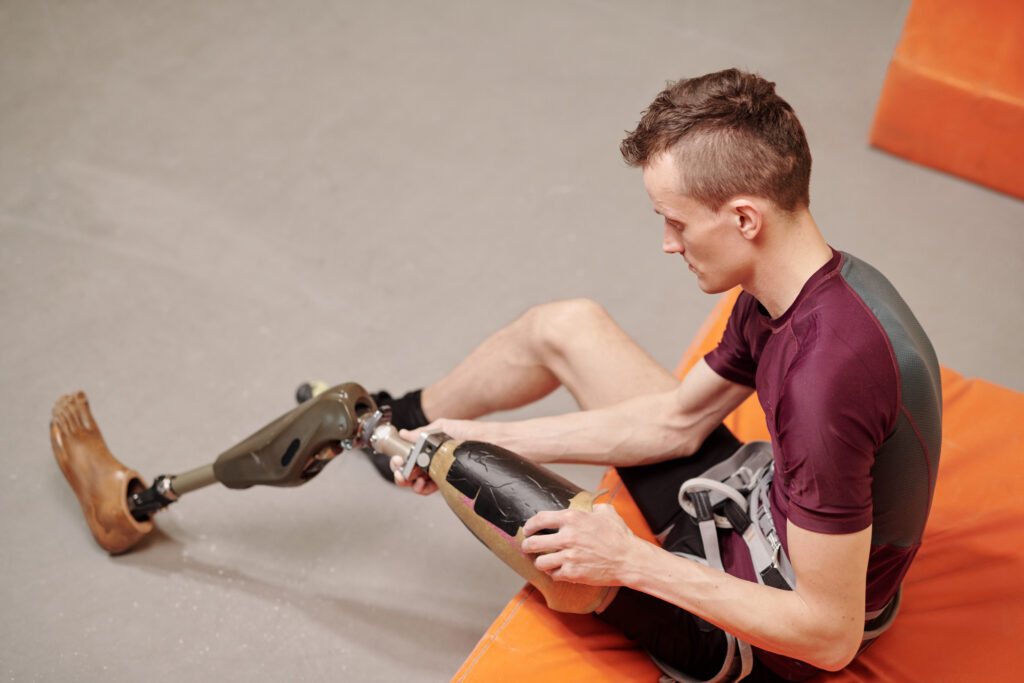
Humidity makes hot weather feel different because moisture does not evaporate from the skin as efficiently when the surrounding air is already humid.
For a prosthetic user, there is another layer to consider. The residual limb is already enclosed within the prosthetic system.
As perspiration increases, moisture may accumulate between the skin and liner or within other areas of the prosthetic interface. Depending on the individual and the suspension system, that can influence comfort and potentially how secure the prosthesis feels.
This is one reason prosthetic care cannot be reduced to whether a device fits during an appointment.
The real test happens during everyday life.
A person may spend the morning in an office, walk outside for lunch, get into a hot vehicle, spend an hour running errands, and later exercise. Each environment creates different demands.
At Around and About Inc., the prosthetic services available for lower and upper extremity patients include custom fitting, modern socket designs, rehabilitation, and onsite capabilities that allow the clinical team to consider how the prosthesis performs during actual movement and daily activities.
Your Prosthetic Fit May Not Feel Identical All Day
Patients sometimes assume that a properly fitted prosthesis should feel exactly the same from morning until night.
The human body does not work that way.
Residual limb volume can change. Activity, body position, physical condition, fluid balance, and other factors can influence the relationship between the residual limb and socket. The Department of Veterans Affairs notes that residual limb size can change and that volume may even vary during the course of a day.
This does not mean every small difference requires an adjustment.
It does mean that changes should be noticed.
If a prosthesis consistently becomes uncomfortable during a particular part of the day, begins moving differently, or develops a recurring pressure area, that information can be valuable during an evaluation.
A prosthetist does not simply need to know that the prosthesis feels uncomfortable. Knowing when it becomes uncomfortable, what the patient was doing, how long the device had been worn, and whether heat or perspiration was involved can provide a much clearer picture.
Sweat Inside a Prosthetic Socket Is More Than an Inconvenience
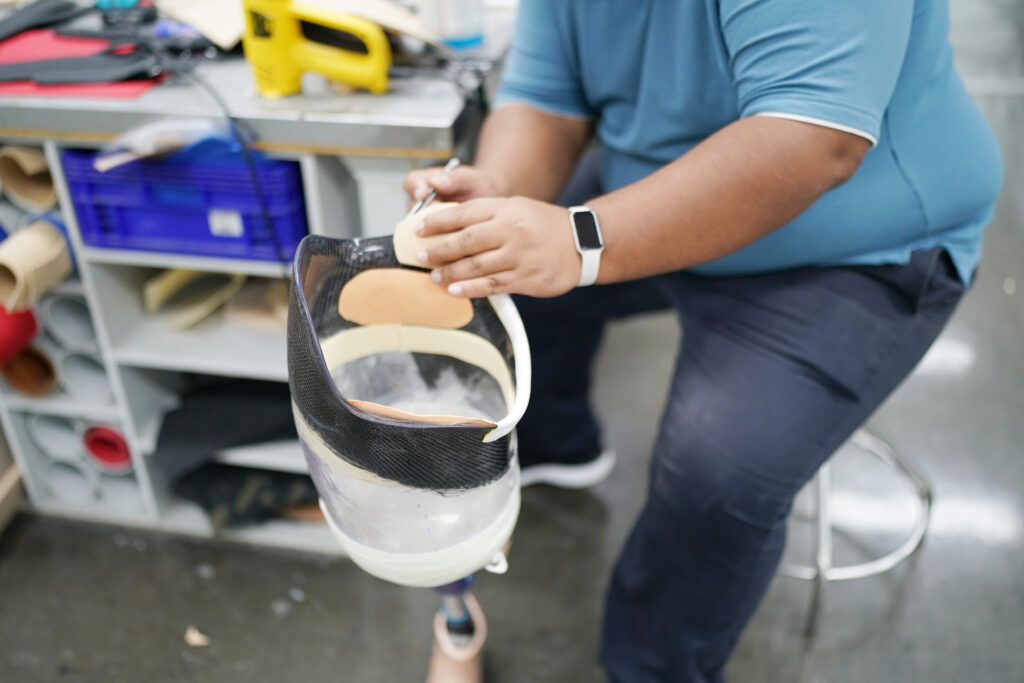
Anyone who spends time outside in South Florida knows how quickly perspiration can develop.
For a prosthetic user, sweat can become trapped against areas of skin that are also experiencing pressure and movement.
The Amputee Coalition explains that prosthetic sockets can trap perspiration and limit air circulation around the residual limb. The organization emphasizes keeping the residual limb, liner, socket, and prosthetic socks clean and thoroughly dry as part of routine skin care.
This becomes particularly important during warmer periods when perspiration increases.
Moist skin behaves differently from dry skin. When moisture remains trapped, the skin can soften and become more vulnerable to irritation from friction and movement.
That does not mean a patient should become alarmed every time they sweat. It means perspiration should be treated as part of prosthetic management rather than ignored.
For someone living in South Florida, managing moisture may need to become as routine as checking the prosthesis itself.
Your Skin Is an Important Part of Prosthetic Fit
When discussing prosthetic fit, attention naturally goes to the socket, liner, suspension, and components.
The skin deserves just as much attention.
The residual limb forms the connection between the body and the prosthesis. If that skin becomes irritated, damaged, or unusually sensitive, prosthetic use can become difficult regardless of how advanced the device may be.
Heat and humidity can make careful skin observation even more important.
After removing the prosthesis, patients should become familiar with what their skin normally looks like. Changes such as persistent redness, blisters, sores, unusual tenderness, rash, or broken skin should not simply be dismissed as the price of wearing a prosthesis.
The Amputee Coalition guidance on avoiding secondary pain recommends paying attention to blisters and areas of redness that do not resolve after the prosthesis is removed and discussing those concerns with a prosthetist.
Skin issues can have multiple causes. Moisture may be involved, but socket fit, friction, pressure, suspension, activity changes, and other factors may also contribute.
That is why persistent problems deserve evaluation rather than guesswork.
Heat Can Reveal a Fit Problem That Was Already Developing
Hot weather does not necessarily create every prosthetic problem from scratch.
Sometimes it makes an existing issue easier to notice.
A slightly loose fit may become more noticeable when perspiration increases movement inside the socket. An area experiencing excessive pressure may become more irritated when moisture and friction are added. A liner that needs attention may become more problematic during a long, hot day.
This distinction matters because simply dealing with the sweat may not solve the underlying problem.
If discomfort repeatedly occurs in the same location, the question should become why.
Is the residual limb moving inside the socket? Has limb volume changed? Is pressure being concentrated in a particular area? Has the patient’s activity level increased? Is the liner functioning properly? Has something changed in the way the patient walks?
A comprehensive prosthetic evaluation looks at the complete picture.
Around and About Inc. combines prosthetics with rehabilitation and physical therapy services, allowing the team to consider the device together with movement and biomechanics. Patients can learn more about this approach and the clinical background of the team on the About Around and About Inc. page.
South Florida Activity Adds Another Layer
South Florida encourages an active lifestyle throughout much of the year.
Walking, golf, cycling, boating, exercise, outdoor events, trips to the beach, yard work, and other activities can increase the amount of time someone spends moving in warm conditions.
For an active prosthetic user, the difference between sitting indoors and spending several hours outside can be substantial.
Physical activity generates additional body heat. The body responds with more perspiration. At the same time, repetitive movement increases the number of interactions occurring between the residual limb and the prosthetic interface.
This is where individualized prosthetic care becomes important.
A patient who works outdoors may have different needs from someone who spends most of the day in an air conditioned environment. An athlete may encounter different challenges from someone whose primary activity is community walking.
Around and About Inc. provides custom sports prosthetics and lower extremity prosthetic services designed around different activity levels and lifestyles. The goal is not simply to provide a prosthesis that works inside the clinic. It is to understand what the patient expects that prosthesis to do once they leave.
Keeping the Residual Limb and Prosthetic Interface Clean Matters
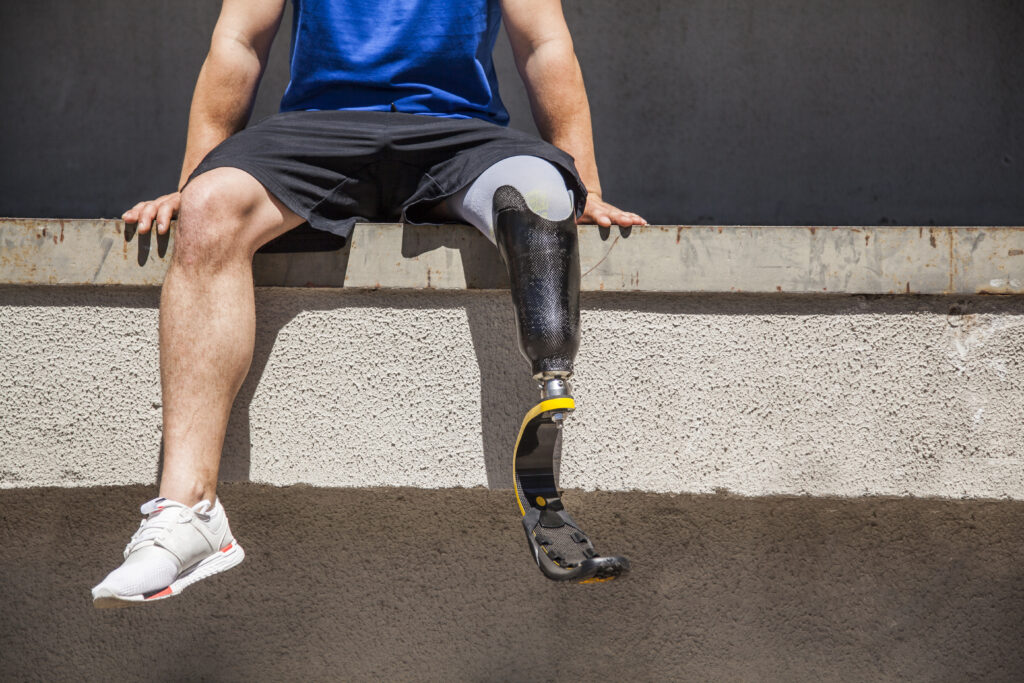
South Florida heat can make hygiene particularly important for prosthetic users.
When perspiration remains against the skin, bacteria and other microorganisms can find a warm and moist environment. Regular cleaning of the residual limb and the components that contact the skin can help reduce that buildup.
The Amputee Coalition recommends cleansing and completely drying the residual limb as part of daily care. It also advises cleaning and drying the socket, liner, and prosthetic socks regularly, according to the appropriate care instructions for those materials.
During periods of heavier perspiration, some people may need additional cleansing.
The important word is dry.
Putting a prosthesis back on while the residual limb or liner remains wet can recreate the same moist environment the patient was trying to correct.
Patients should follow the cleaning instructions provided for their particular liner and prosthetic system because materials and manufacturer recommendations can vary.
What About Antiperspirants and Other Sweat Solutions?
A common question is whether someone can simply use an antiperspirant to control sweating inside the prosthetic socket.
There are products and strategies used by some prosthetic patients to manage perspiration, but this is an area where individualized advice matters.
Skin sensitivity varies. Liners and socket systems differ. Some patients may have medical conditions that make skin care more complicated.
Rather than experimenting with multiple products, particularly on already irritated skin, patients should discuss excessive perspiration with their prosthetist or appropriate healthcare professional.
The Amputee Coalition has discussed options including moisture management strategies and certain prosthetic liner approaches for people experiencing significant socket sweat. The right solution, however, depends on the person and the prosthetic system.
A product that works well for one patient may not be appropriate for another.
Do Not Automatically Add Socks to Every Fit Problem
When a prosthesis begins feeling different during the day, a patient may be tempted to immediately change sock thickness or make another adjustment on their own.
Prosthetic socks can be an important part of managing volume changes for certain prosthetic systems, but not every comfort problem has the same cause.
Heat related moisture, changes in residual limb volume, suspension issues, pressure, alignment, liner condition, and socket fit can sometimes create similar sensations.
Adding material without understanding the cause may not address the actual problem.
Patients should follow the sock management and fit instructions provided specifically for their prosthesis. When the normal strategy no longer works, that is useful information to bring to the prosthetist.
The goal is not simply to make the prosthesis feel tighter. The goal is to maintain the appropriate relationship between the residual limb and the socket.
Pay Attention to Changes in How You Walk
Heat related discomfort can sometimes influence movement before the patient consciously realizes it.
If an area becomes irritated, someone may shorten a step to avoid pressure. If the prosthesis feels less secure, they may shift more weight toward the opposite side. If they are uncomfortable, they may move differently simply to finish the activity.
Over time, compensatory movement can become habitual.
This is one reason Around and About Inc. incorporates rehabilitation into its prosthetic services. The facility includes onsite physical therapy and a suspension ceiling track extending more than 120 feet for therapeutic training with prosthetics and braces.
The company’s full functioning laboratory also allows prosthetic patients to participate in physical therapy while adjustments are made when necessary.
That relationship between prosthetic fit and movement is particularly valuable when the complaint is difficult to describe. Sometimes watching how a person walks can reveal information that cannot be discovered by looking at the prosthesis alone.
A Good Morning Fit Does Not Always Tell the Whole Story
A prosthetic appointment typically captures one moment in a patient’s day.
The patient may arrive after spending time in an air conditioned vehicle. They may not have been particularly active before the appointment. Their residual limb may feel completely different than it does after several hours outdoors.
That makes patient feedback extremely valuable.
If problems tend to appear later in the day, tell the prosthetist.
If they happen after exercise, explain that.
If the prosthesis feels secure indoors but different after working outside, that information matters.
Details about timing, activity, heat exposure, perspiration, skin changes, and the location of discomfort can help a prosthetist understand what is happening outside the clinical setting.
Good prosthetic care depends partly on good communication.
When Heat-Related Prosthetic Problems Need Professional Attention
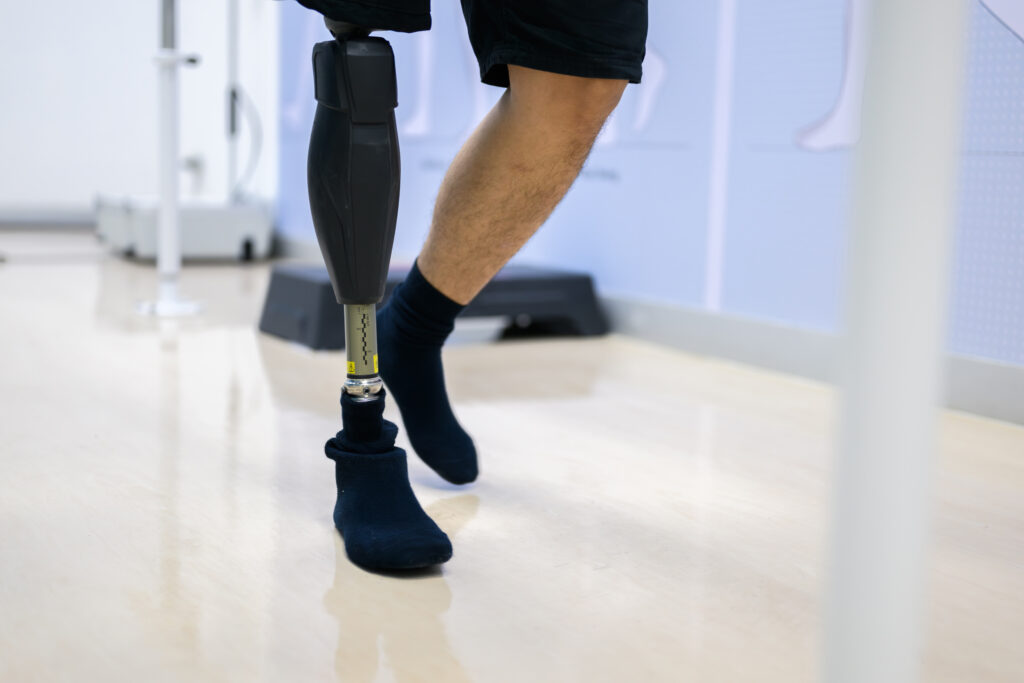
Some changes deserve more than a change of clothes and a few minutes in the air conditioning.
Persistent skin irritation, recurring blisters, sores, unusual pain, repeated loss of suspension, significant changes in socket comfort, or a prosthesis that suddenly feels unstable should be evaluated.
People with diabetes, circulation problems, or other conditions affecting skin health should be especially careful about changes involving the residual limb and should follow the guidance of their medical team.
The goal is to address a developing issue before it interferes with mobility or makes it difficult to wear the prosthesis.
Patients can also review the Around and About Inc. prosthetic maintenance guide for additional information about maintaining a prosthetic system and recognizing when professional attention may be needed.
Prosthetic Care Should Match the Environment You Actually Live In
A prosthesis does not exist in a controlled environment.
It has to function where the patient lives.
For South Florida patients, that means heat, humidity, sudden rain, long summers, outdoor activity, air conditioned buildings, hot vehicles, and frequent transitions between very different environments.
Those conditions should be part of the conversation about prosthetic care.
The right socket design, appropriate components, proper fit, good skin care, rehabilitation, and regular evaluation all contribute to the larger goal of helping a person move comfortably and confidently.
No prosthetist can change South Florida weather.
What can be changed is how well the prosthesis is prepared to meet the needs of the person living in it.
Personalized Prosthetic Care in South Florida
Heat and humidity may seem like minor inconveniences until they begin affecting comfort, skin health, suspension, or the way someone moves.
That is why changes should be considered in context.
Sometimes the solution may involve better moisture management. Sometimes the prosthetic fit needs to be evaluated. In other situations, a liner, socket, component, or rehabilitation issue may deserve attention.
There is no single answer because there is no single prosthetic patient.
Around and About Inc. has been serving patients since 1995 and combines prosthetic and orthotic expertise with rehabilitation, physical therapy, onsite fabrication, and modern prosthetic technology. The practice is located in Plantation and focuses on creating individualized solutions based on the needs and goals of each patient.
If South Florida heat is making your prosthesis feel different, causing recurring discomfort, or affecting your confidence during daily activities, contact Around and About Inc. to have the situation professionally evaluated.
Your prosthesis has to work in the same environment you do. In South Florida, planning for heat and humidity is simply part of creating a better prosthetic experience.