
A prosthetic leg can be made from advanced materials, use sophisticated components, and fit comfortably inside the socket, yet still feel wrong when a person stands or walks. Sometimes the problem is not the technology itself. It is prosthetic alignment.
Alignment determines how the different parts of a prosthesis relate to the body and to one another during standing and movement. Small changes in the position or angle of a component can influence how weight travels through the prosthesis, how smoothly someone moves through each step, and how stable the device feels during everyday activities.
For the person wearing the prosthesis, these changes may not feel small at all. An adjustment that appears minor on a workbench can make walking feel more natural, improve stability, reduce unnecessary compensatory movement, or address pressure that develops during use.
That is one reason the process at Around and About Inc. goes beyond selecting prosthetic components. The company combines prosthetic expertise, rehabilitation knowledge, onsite capabilities, and decades of clinical experience to evaluate how the entire prosthetic system works with the person using it.
What Prosthetic Alignment Actually Means
A lower extremity prosthesis is a system. The socket, connecting components, knee when applicable, foot, suspension system, and the person’s body all influence how that system performs.
Prosthetic alignment refers to the positioning of these components in relation to the residual limb and the rest of the body. The goal is not simply to make everything appear straight. The goal is to create a relationship among the components that supports stability, comfort, efficient movement, and the functional needs of the individual.
Guidance from the U.S. Department of Veterans Affairs explains dynamic alignment as part of the process of adjusting a prosthesis while a person stands and walks. This distinction is important because a prosthesis can appear properly positioned while someone is standing still and behave differently once that person begins moving.
Real movement provides information that cannot always be gathered from a stationary fitting.
Why Small Prosthetic Alignment Changes Can Feel So Significant
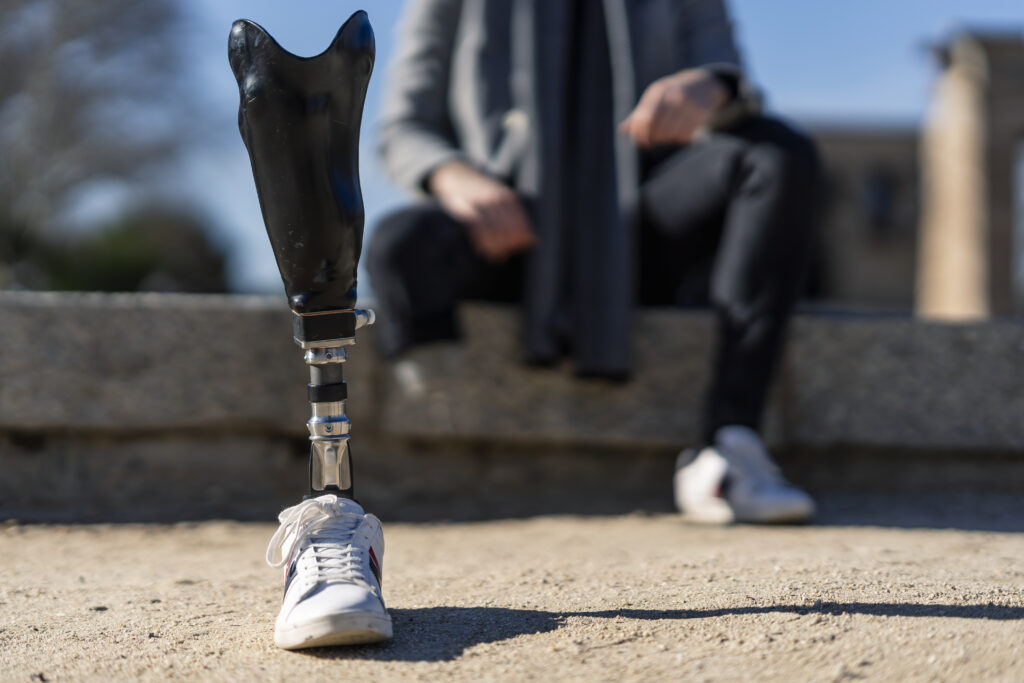
Walking involves a continuous transfer of forces through the body. Every step requires balance, stability, weight transfer, forward progression, and coordination between the prosthetic and nonprosthetic sides.
A relatively small alignment change can alter how those forces are managed.
Imagine a prosthetic foot positioned at an angle that does not adequately match the person’s movement pattern. The user may compensate without consciously realizing it. They might alter their stride, shift their upper body, spend less time on the prosthetic side, or rely more heavily on the opposite leg.
The person may simply describe the experience as feeling awkward, unstable, or tiring.
This is why an experienced prosthetist pays attention to more than the device itself. How the person stands, initiates a step, transfers weight, moves through the prosthetic side, and completes the gait cycle can all provide valuable information.
The objective is not to chase a theoretically perfect position. It is to find the alignment that works with the individual.
Prosthetic Alignment Is Personal
Two people with similar amputations do not necessarily require identical prosthetic setups.
Height, weight, residual limb characteristics, muscle strength, range of motion, balance, activity level, footwear, occupation, environment, and personal goals can all influence what works best.
A person whose primary goal is comfortable household and community walking may have different demands than someone who works on their feet throughout the day. An athlete may place entirely different forces on a prosthesis than someone whose daily routine involves primarily level surfaces.
This individualized approach is reflected in the prosthetic and rehabilitation services at Around and About Inc.. The facility provides lower and upper extremity prosthetics, custom sports prosthetics, onsite physical therapy, gait related rehabilitation, and a functioning laboratory where prosthetic adjustments can be made when needed.
That combination matters because alignment is ultimately about the relationship between the device and human movement.
Static Alignment Is Only the Beginning
The initial setup of a prosthesis establishes a starting point, but standing is not the same as walking.
Once movement begins, clinicians can observe how the prosthesis behaves under actual load. This is where dynamic alignment becomes especially important.
The clinician may examine how the foot contacts the ground, how weight progresses over it, how the knee behaves, how long the person remains on each side, and whether the upper body is compensating for something happening farther down the chain.
The process can involve adjustment, observation, feedback, and further refinement.
The VA and Department of Defense Clinical Practice Guideline for Lower Limb Amputation Rehabilitation addresses dynamic alignment during initial gait training and recognizes that a prosthetic prescription may require modification as rehabilitation progresses.
This helps explain why professional prosthetic care should be viewed as a process rather than a single fitting appointment.
Your Body Can Change Even When the Prosthesis Does Not
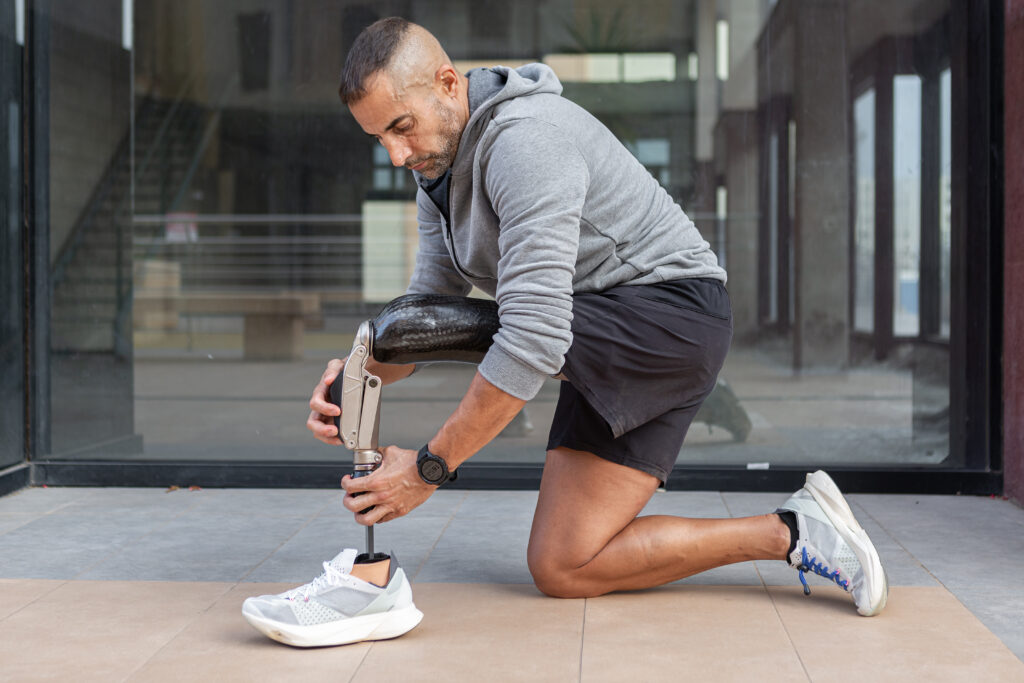
A prosthesis that worked extremely well months ago may eventually begin to feel different.
That does not automatically mean something has failed.
The human body changes. Residual limb volume can fluctuate. Strength can improve. Activity levels can increase or decrease. Walking patterns can evolve as a person becomes more confident. Weight changes, medical conditions, footwear, and everyday routines can also affect the way a prosthesis interacts with the body.
These changes can influence both fit and alignment.
The Amputee Coalition provides education and support for people living with limb loss and limb difference, including information related to prosthetic use, mobility, recovery, and long term life with a prosthesis.
This is one reason users should pay attention when a familiar prosthesis begins behaving differently.
Comfort Problems May Be Telling You Something
Discomfort should not automatically be accepted as an unavoidable part of wearing a prosthesis.
The source needs to be understood.
Sometimes discomfort relates to socket fit. In other situations, alignment may contribute to how forces are being transferred through the prosthesis. There can also be issues involving suspension, components, residual limb changes, footwear, skin condition, or other factors.
Trying to identify the cause without evaluating the entire system can miss the bigger picture.
A useful clinical evaluation asks not only where discomfort occurs but when it occurs. Does it appear immediately? Does it develop after prolonged walking? Does it happen during stairs, slopes, turning, or standing? Has something recently changed?
Those details help transform a vague complaint into useful clinical information.
Patients can also review the Around and About Inc. prosthetic maintenance guide for information about caring for a prosthesis and recognizing when professional attention may be appropriate.
The Connection Between Prosthetic Alignment and Gait
Gait can reveal a great deal about how a prosthesis is functioning.
When someone walks, clinicians can observe timing, symmetry, balance, stride, weight transfer, stability, and compensatory movements. A person may have adapted to an inefficient pattern so gradually that it feels normal to them.
This makes observation valuable.
Around and About Inc. has an important advantage in this area because prosthetics and rehabilitation are available within the same facility. Its prosthetic and rehabilitation services include onsite physical therapy for people with amputations and gait disorders, while its laboratory allows prosthetic patients to receive therapy while adjustments are made when appropriate.
The facility also uses a suspension ceiling track extending more than 120 feet for therapeutic training with prosthetics and braces. This type of environment allows clinicians to consider the prosthesis in the context that ultimately matters most: movement.
A prosthesis does not perform in isolation. It performs while someone walks through a parking lot, navigates a hallway, gets out of a chair, climbs stairs, turns a corner, exercises, works, or spends time with family.
Those real movements can reveal details that may not be obvious while sitting in an examination room.
Prosthetic Alignment Can Affect More Than the Prosthetic Side
When a prosthesis does not feel quite right, the effects may not remain limited to the prosthetic side.
The human body is extremely good at finding ways to accomplish a task. If one movement becomes difficult, another part of the body may compensate. Someone might shift their trunk, change the length of a step, alter the way they load the opposite leg, or approach certain movements differently.
These adaptations are not always obvious to the person.
That is another reason gait observation and professional evaluation matter. Instead of focusing only on the location where a patient feels discomfort, the clinician can look at the complete movement pattern.
A complaint involving fatigue, for example, does not automatically identify its cause. The question becomes why the person is working harder during movement and whether fit, alignment, physical conditioning, component selection, or another factor is contributing.
The answer may require looking at the person and the prosthesis together.
Technology Cannot Replace Clinical Judgment
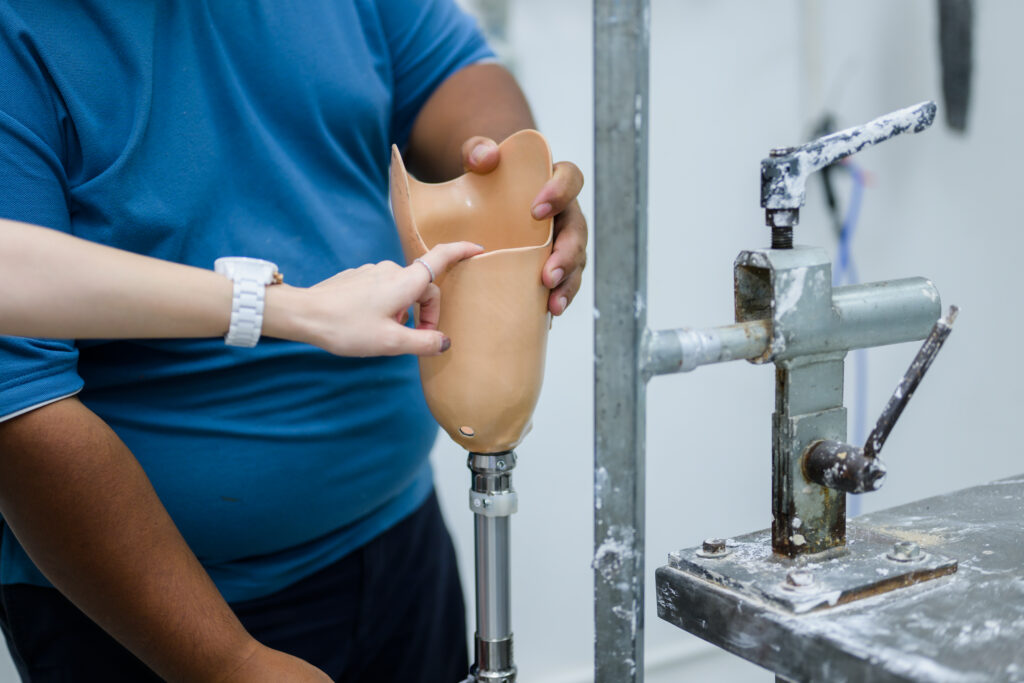
Modern prosthetic technology is remarkable. Microprocessor controlled components, advanced feet, sophisticated suspension systems, lightweight materials, and specialized components have expanded what is possible for many prosthetic users.
Around and About Inc. works with different prosthetic solutions intended to meet varying functional and activity needs. The objective is not simply to select the most advanced technology available. It is to determine which combination of components, socket design, alignment, and rehabilitation makes sense for the individual.
Even sophisticated technology has to interact correctly with the person wearing it.
The latest component is not automatically the right component for every person, just as one alignment cannot be universally applied to everyone.
This is where clinical experience remains essential.
Why Patient Feedback Matters During Alignment
A prosthetist can observe movement, but the person wearing the prosthesis provides information no one else can.
They know where pressure is occurring. They know when a step feels unstable. They know whether the prosthesis feels different at the end of the day or whether a particular movement has suddenly become more difficult.
Good prosthetic care turns those observations into useful information.
Instead of simply saying that something feels wrong, it can help to describe when the problem occurs, where it is felt, how long it lasts, and whether anything has changed recently.
That conversation becomes part of the evaluation.
Around and About Inc. emphasizes individualized care and comprehensive treatment. Its clinical experience brings together prosthetics, orthotics, physical therapy, biomechanics, gait disorders, and rehabilitation. Patients can learn more about the people and philosophy behind that approach on the About Around and About Inc. page.
The prosthetist brings clinical expertise to the evaluation. The patient brings firsthand knowledge of how the prosthesis feels during real life. Both perspectives matter.
When Should Prosthetic Alignment Be Evaluated?
You do not necessarily need to understand the mechanics of alignment to recognize that something has changed.
Perhaps walking suddenly requires more effort. Maybe the prosthesis feels less stable than before. You may notice a change in your gait, recurring pressure in a particular area, unusual wear on a shoe, or difficulty performing activities that previously felt comfortable.
Those changes deserve attention rather than assumption.
Not every issue will turn out to be an alignment problem. That is precisely why evaluation matters. Socket fit, residual limb changes, component wear, suspension, physical changes, footwear, and alignment can produce overlapping symptoms.
A prosthetist can assess these factors together and determine what deserves attention.
The important point is not to assume that a new problem is simply something you must learn to tolerate.
Prosthetic Alignment Should Evolve With the Person
One of the biggest misconceptions about a prosthesis is that the process ends when the finished device is delivered.
In reality, successful prosthetic use can evolve.
Someone who was initially focused on walking safely may later want to exercise, travel, return to work, participate in sports, or navigate more demanding environments. Strength and confidence can improve. Physical needs can change.
The prosthesis may need to evolve with those changes.
Modern rehabilitation recognizes this broader goal. The VA and Department of Defense guidance for people with lower limb amputation considers rehabilitation in the broader context of mobility, everyday activities, participation, work, recreation, and independence rather than treating successful prosthetic use as simply receiving a device.
That longer view is important. Prosthetic alignment is not simply about how a device performs during one appointment. It is about helping the prosthesis continue to support the person’s real life.
The Around and About Inc Approach to Prosthetic Alignment
The difference between a prosthesis that technically fits and one that truly works well can come down to details.
Around and About Inc. has served patients since 1995 and combines prosthetic and orthotic fabrication with rehabilitation and physical therapy expertise. Founder Richard W. Conrey Jr., MS, PT, CPO, is both an American Board Certified prosthetist and orthotist and a physical therapist by training, bringing a perspective that connects prosthetic design with biomechanics and human movement.
That combination is particularly relevant when dealing with alignment.
The question is not simply whether the prosthesis can be worn. The more meaningful questions are how the person moves with it, whether it supports their goals, how comfortable it remains during real activities, and whether adjustments could improve the overall experience.
Sometimes those improvements require a significant change. Other times, the difference can come from an adjustment that looks surprisingly small.
For the person taking the next step, however, that small adjustment can change everything.
If your prosthesis no longer feels or performs the way it once did, you can contact Around and About Inc. to schedule an evaluation and determine whether fit, alignment, components, or another factor may need attention.
